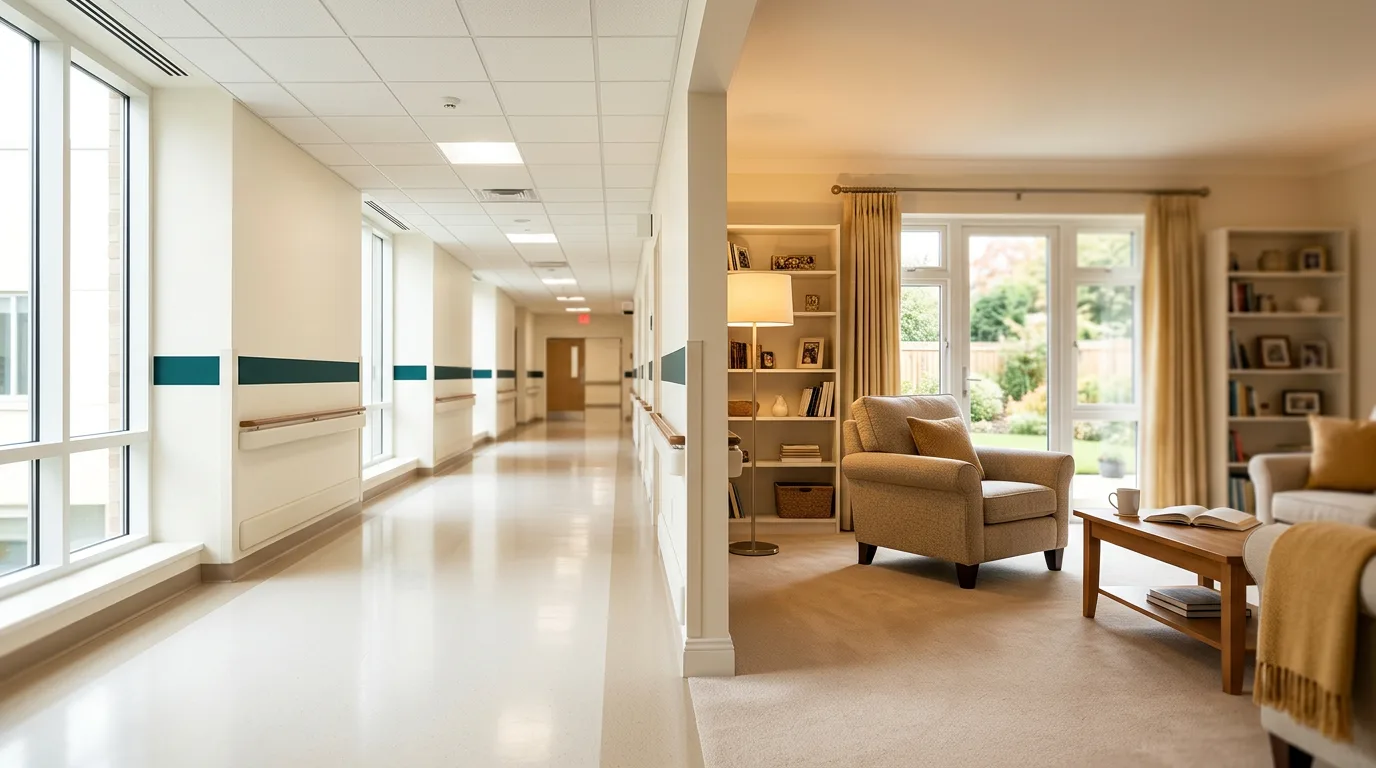
She has been medically cleared for three days. The physician signed the discharge order on Tuesday. It is now Friday, and Mrs. Chen is still in a hospital bed at Sunnybrook — not because she needs acute care, but because there is nowhere ready to receive her at home.
Her family wants her home. Her care team wants the bed. The system has designated her ALC — Alternate Level of Care — which means she no longer requires the intensity of services provided in an acute care hospital, but she cannot be discharged because the next step in her care is not yet available.
Mrs. Chen is not an outlier. She is the norm. Across Ontario, thousands of patients occupy acute care beds while waiting for home care, long-term care, or rehabilitation placements that the system cannot deliver fast enough. The result is a bottleneck that harms patients, strains hospitals, and costs the healthcare system hundreds of millions of dollars every year.
This article examines the ALC crisis through Ontario-specific data, explains where the transition pipeline is breaking, and makes the case that private home care partners with same-day intake capability can meaningfully reduce ALC days — with better clinical outcomes for patients and better financial outcomes for hospitals.
Key takeaway: Ontario hospitals recorded approximately 1.5 million ALC patient days in 2023–2024 — the equivalent of 4,096 acute care beds occupied every day by patients who no longer need them. Faster home care transitions are clinically better for patients (less deconditioning, fewer hospital-acquired infections) and financially better for the system (home care costs a fraction of an acute care bed day).
The Scope of Ontario's ALC Crisis
The numbers are not subtle. According to CIHI data for 2023–2024, 17.4% of all hospital days in Ontario were classified as ALC — higher than the national average of 16.9%. That translates to roughly 1.5 million ALC days province-wide, or the equivalent of more than 4,000 acute care beds permanently occupied by patients who do not need acute care.
The majority of these patients are waiting for one of three things: long-term care placement, home care services through Ontario Health atHome, or a rehabilitation or transitional care bed. Of these, long-term care waits account for the largest share — approximately 59% of cumulative ALC days in Ontario hospitals.
The GTA faces a particularly acute version of this problem. A Wellesley Institute analysis found that the median wait for long-term care placement in GTA regions was 223 days — 77 days longer than the Ontario average. Nearly 48,000 people are currently on the provincial long-term care waitlist. For many ALC patients, the wait for a long-term care bed is measured not in weeks but in months.
In 2023–2024, 17.4% of all hospital days in Ontario were ALC days — approximately 1.5 million patient days, equivalent to 4,096 acute care beds occupied every day of the year by patients who no longer need hospital-level care.
These are not patients who want to be in hospital. These are patients the system has declared ready for discharge but cannot move because the downstream capacity does not exist — or cannot be mobilised fast enough.
The Financial Cost: Hospital Beds vs. Home Care
Every day a patient remains in an acute care bed designated as ALC, the hospital incurs the full cost of that bed while delivering care the patient does not clinically require. The financial case for faster transitions is not a matter of opinion — it is arithmetic.
Research published in the Journal of Health Care Finance estimates that each ALC day costs the Ontario system approximately $500 more than the equivalent care delivered in a lower-acuity setting. When you compare hospital bed costs directly to home care, the gap is even wider.
| ALC Duration | Estimated Hospital Cost | Estimated Home Care Cost | System Savings |
|---|---|---|---|
| 7 days | $10,500–$14,000 | $2,100–$3,500 | $7,000–$11,900 |
| 14 days | $21,000–$28,000 | $4,200–$7,000 | $14,000–$23,800 |
| 30 days | $45,000–$60,000 | $9,000–$15,000 | $30,000–$51,000 |
Hospital cost estimated at $1,500–$2,000 per acute care bed day. Home care estimated at $300–$500 per day for personal support and nursing visits. Actual costs vary by patient acuity and care plan.
At a system level, the math is staggering. If even 10% of Ontario's 1.5 million ALC days could be converted to home-based care, the potential annual savings would be measured in hundreds of millions of dollars — capacity that could be redirected to surgical waitlists, emergency department flow, and patients who genuinely need acute care beds.
The Human Cost: What Happens to Patients Who Wait
The financial argument alone should be enough to drive action. But the human cost of ALC waits is what makes this crisis urgent rather than merely expensive.
An elderly patient who is medically stable but confined to a hospital bed is not in a neutral holding pattern. They are actively declining. The clinical evidence is unambiguous.
Muscle loss and deconditioning. Older adults lose 2 to 5% of muscle strength per day of bed rest. A study in the Journal of Gerontology found that healthy adults aged 67 and older lost approximately one kilogram of lean tissue from their lower extremities after just 10 days of bed rest — accompanied by a 16% decline in knee extensor strength. The deconditioning is more severe and recovery slower in elderly patients than in younger populations.
The recovery ratio is punishing. Clinical data suggests that elderly patients may require up to two weeks of reconditioning for every single day of absolute bed rest. A patient who spends 14 unnecessary days in an ALC bed may need months of rehabilitation to return to their pre-hospital functional baseline — if they return to it at all.
Hospital-acquired infections. Prolonged hospital stays expose ALC patients to infection risks that would not exist in a home environment. A study tracking adverse events among ALC patients documented 94 infections over 8,668 ALC days, with urinary tract infections and respiratory infections the most common. The median age of affected patients was 80.
Cognitive decline and dignity erosion. Hospital environments are disorienting for elderly patients — unfamiliar surroundings, disrupted sleep cycles, limited mobility, reduced social contact, and the psychological toll of being told you are well enough to leave but cannot. For patients with any degree of cognitive vulnerability, the longer the ALC stay, the greater the risk of hospital-acquired delirium and accelerated functional decline.
An elderly patient who spends 14 unnecessary days in a hospital bed may require months of rehabilitation to return to baseline function. Every ALC day is not a pause in recovery — it is an active step backward.
Why the Bottleneck Exists
The ALC crisis is not caused by a single failure. It is the result of several structural problems converging at the point of hospital discharge.
Ontario Health atHome capacity. Ontario Health atHome — the provincial agency that replaced the Local Health Integration Networks in June 2024 — has established a five-day benchmark for initiating home nursing and personal support visits for patients with complex care needs. In practice, wait times frequently exceed this benchmark, particularly in the GTA where demand outpaces service capacity. The system is designed to assess, coordinate, and deploy care — but the pipeline has more patients than it can process at the speed hospitals need.
Long-term care waitlists. For ALC patients whose destination is long-term care rather than home, the bottleneck is even more severe. With nearly 48,000 people on the provincial waitlist and popular GTA facilities quoting wait times of two to four years, a long-term care placement is not a discharge plan — it is a multi-year queue. Crisis placements can happen within days, but standard admissions take months.
Discharge planning delays. Research in Ontario hospitals has found that discharge planning did not begin until the day of discharge for up to 40% of patients, with the average discharge plan taking three days to organise once initiated. When discharge planning starts late, every downstream step — home care assessment, equipment delivery, family coordination — is delayed in turn.
The gap between "medically ready" and "home-ready." A physician can declare a patient medically stable in minutes. Making a home ready to receive that patient — medication reconciliation, safety modifications, caregiver scheduling, equipment procurement — takes days. The ALC designation captures the time between those two moments, and the system has no mechanism to compress it efficiently.
How Private Home Care Fills the Gap
The public system was not designed for speed. Ontario Health atHome is a coordination and funding body — it assesses, authorises, and contracts. That process takes time. For ALC patients, time is the one resource they cannot afford to spend.
Private home care providers operate on a different timeline. A provider with same-day intake capability can do what the public system structurally cannot: receive a referral from a discharge planner in the morning and have a care plan aligned with discharge orders by the afternoon.
This is not a replacement for Ontario Health atHome. It is a bridge. Many families use private care to cover the critical first days or weeks after discharge while their public care assessment is being processed. Others use it for the specific intensity of support — 8, 12, or 24 hours per day — that the public system does not fund at the level the patient requires.
What makes this model work for discharge planners specifically:
- Speed. Same-day intake eliminates the waiting period that creates ALC days. A referral on Tuesday does not become a first visit on the following Tuesday — it becomes a care plan on Tuesday and a first visit on Wednesday.
- Discharge alignment. Care plans built directly from hospital discharge orders — medication schedules, wound care protocols, mobility goals, follow-up appointment dates — rather than from a separate assessment process that may not reference the discharge summary.
- Structured transition protocols. A defined 72-hour framework covering the three highest-risk elements of the post-discharge window: medication reconciliation, wound-site monitoring, and mobility support. For a detailed family-facing version of this protocol, see our 72-Hour Survival Guide for families.
- Caregiver continuity. A consistent two-person care team rather than rotating staff — which matters enormously for elderly patients, particularly those with cognitive vulnerability, who are already disoriented from the hospital stay.
A Transition Protocol That Works
The following framework is designed for discharge planners who want a reference point for what an effective hospital-to-home transition looks like when a private care partner is involved. It is not theoretical — it reflects what high-functioning transitions actually require.
| Stage | Timeline | Action |
|---|---|---|
| Referral | Day of discharge decision | Discharge planner contacts home care provider with patient profile, discharge summary, and care needs assessment |
| Intake | Same day | Provider completes intake, confirms service availability, and assigns care team |
| Care Plan | Within 4 hours of referral | Care plan aligned with discharge orders — medication schedule, wound protocol, mobility goals, dietary notes, emergency contacts |
| First Visit | Within 12 hours of discharge | First PSW or nursing visit at home — medication reconciliation, home safety check, baseline assessment |
| 72-Hour Check-in | Day 3 | Care coordinator reviews shift reports, confirms medication compliance, assesses patient trajectory, flags concerns to discharge team |
| 7-Day Reassessment | Day 7 | Full reassessment of care plan — adjust hours, escalate or de-escalate support level, confirm follow-up appointments attended |
This protocol compresses what typically takes one to two weeks through the public system into a 12-hour activation window. For a discharge planner managing ALC patients, the difference between a 12-hour and a 12-day transition is not incremental — it is the difference between freeing a bed this week and freeing it next month.
The Case for System-Level Collaboration
Individual hospital-provider partnerships can reduce ALC days at the facility level. But solving the ALC crisis at scale requires structural changes to how hospitals, Ontario Health atHome, and private providers work together.
Expedited public assessments for ALC-designated patients. Ontario Health atHome's five-day benchmark is a step in the right direction, but ALC patients should be triaged to the front of the queue — not processed alongside routine community referrals. A dedicated ALC assessment stream could compress the public system's response time from days to hours.
Hospital-provider data sharing agreements. When a private provider receives a referral, the discharge summary and care needs should flow electronically — not by fax, not by phone call, not by family member carrying a folder. Secure data sharing between hospital systems and home care providers would eliminate the information lag that adds days to every transition.
Bundled transition funding. Ontario's intensive home care programme — at up to $700 per day — demonstrates that the province is willing to fund aggressive home-based alternatives. A bundled funding model that covers the first 72 hours of post-ALC home care would create a financial pathway for hospitals to discharge patients faster without shifting costs to families.
Ontario Health's Operational Direction for Fall/Winter 2025–2026 explicitly prioritises collaborative efforts to reduce ALC volumes, including capacity maximisation, admission avoidance, and discharge supports. The GTA Rehab Network's updated Discharge Planning Guidelines, published in February 2025, promote consistent discharge planning processes across inpatient rehabilitation. The policy direction is clear. What remains is the operational infrastructure to execute it.
The ALC crisis is not a capacity problem that can be solved by building more beds. It is a transition problem that can be solved by moving patients to the right care setting faster — and home care is that setting for the majority of ALC-designated patients.
What This Means for Your Hospital
If you are a discharge planner or hospital administrator reading this, the ALC data is not news to you. You live it every day — the bed meetings, the patient flow reports, the families asking when their mother can go home, the surgical teams waiting for beds that do not open.
The opportunity is not to eliminate ALC overnight. It is to build a transition infrastructure that can move the patients who are home-ready — today — into home-based care within hours rather than days. That means identifying private partners who can deliver same-day intake, structured care plans, and reliable communication back to the hospital team.
Nurtura's hospital partnership model is designed specifically for this use case. Same-day intake. Care plans aligned with discharge orders within four hours. A dedicated two-person care team for every patient. And shift reports that flow back to the discharge planner — not into a black box. If your facility is working to reduce ALC days, we would welcome the conversation.
For the family-facing companion to this article — the practical 72-hour guide your patients' families need when they get home — see The First 72 Hours After Hospital Discharge: A Family's Survival Guide.
Frequently Asked Questions
What does ALC mean and why does it matter for Ontario hospitals?
ALC stands for Alternate Level of Care — a designation given to hospital patients who no longer require the intensity of acute care but cannot be discharged because their next care setting is not yet available. In Ontario, ALC patients occupied 17.4% of all hospital days in 2023–2024, equivalent to more than 4,000 beds. This reduces capacity for surgical cases, emergency admissions, and patients who genuinely need acute care, while costing the system significantly more than equivalent care delivered at home or in the community.
How much more does an ALC bed day cost compared to home care?
An acute care bed day in Ontario costs approximately $1,500 to $2,000, while equivalent home-based personal support and nursing care costs approximately $300 to $500 per day. Each ALC day represents roughly $1,000 to $1,500 in avoidable system spending. Over a 30-day ALC stay, the cost differential can exceed $30,000 to $51,000 per patient.
How can private home care providers help reduce ALC days?
Private providers with same-day intake capability can bridge the gap between hospital discharge readiness and public system processing times. By aligning care plans with discharge orders within hours — not days — and deploying a care team within 12 hours of discharge, private partners can convert ALC bed days into home care days. This is particularly effective for patients waiting for Ontario Health atHome assessments, where the transition period creates the majority of avoidable ALC days.
Maria Wallace
Founder & Clinical Director, RN, M.Ed., Ph.D.